November 17, 2026
My Job No Longer Exists

8 minutes reading
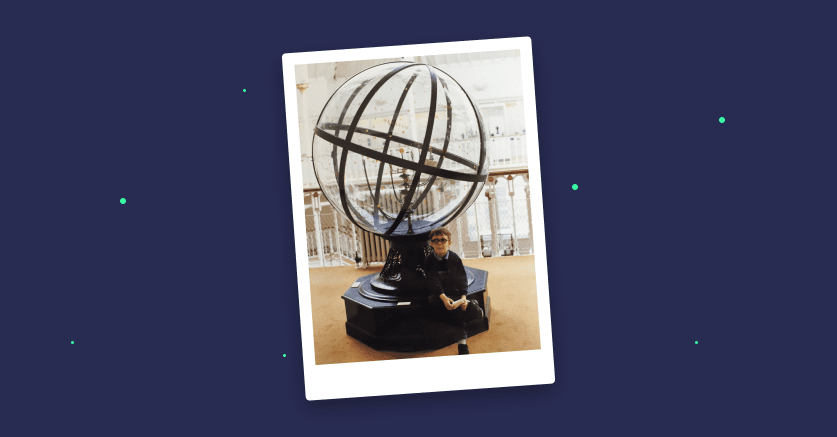
My profession, the one I trained for since I was 12, no longer exists.
The entire digital industry has been upended by the arrival of AI.
A feature that used to take three days to develop now takes me just a few hours.
This article is a personal reflection on that transformation, trying to avoid both technophobia and evangelism. If this helps me answer my family’s holiday questions about how AI has affected my work, that’s already a win.
Being 12 With a Computer
I started programming early, with PHP and ActionScript (Flash). It felt like gaining a superpower: I could build anything and share it with the world.
It quickly became a small passion—first websites for local organizations or the campsite we visited every vacation. I soon discovered this could actually be a job (and as a bonus, it helped justify those long evenings playing video games to my parents)!
Programming became part of my identity. I got to "create" games, images, fully interactive websites.
Turning a Passion Into a Career and Building a Company
Since then, I co-founded Premier Octet in 2018. We’re now a 10-person team focused on quality work. My role shifted from just coding to running the business (sales, hiring, client relations, etc.). Still, coding remained the main focus of my time, with management as only a small slice.
Up until recently, code was my refuge—a way to reconnect with my passion and expertise, even as a manager.
Past tech shifts (frameworks, cloud, open source) never threatened that balance.
The Turning Point
A few dates that changed everything:
Autocomplete: June 2021—our editor began completing lines with real-time code suggestions.
Chat: November 2022—ChatGPT. We’d paste questions or code into the editor and wait for an answer.
Agent: Late 2024—Cursor releases Composer, which allows you to not only chat with an AI directly in your IDE, but for it to be aware of your working context (open files, project docs, etc.).
Five years seems long enough to grieve a loss. Yet it’s only been a few months since I shifted to a new workflow: ADEs—dev environments designed to orchestrate agents rather than having you hand-write code.
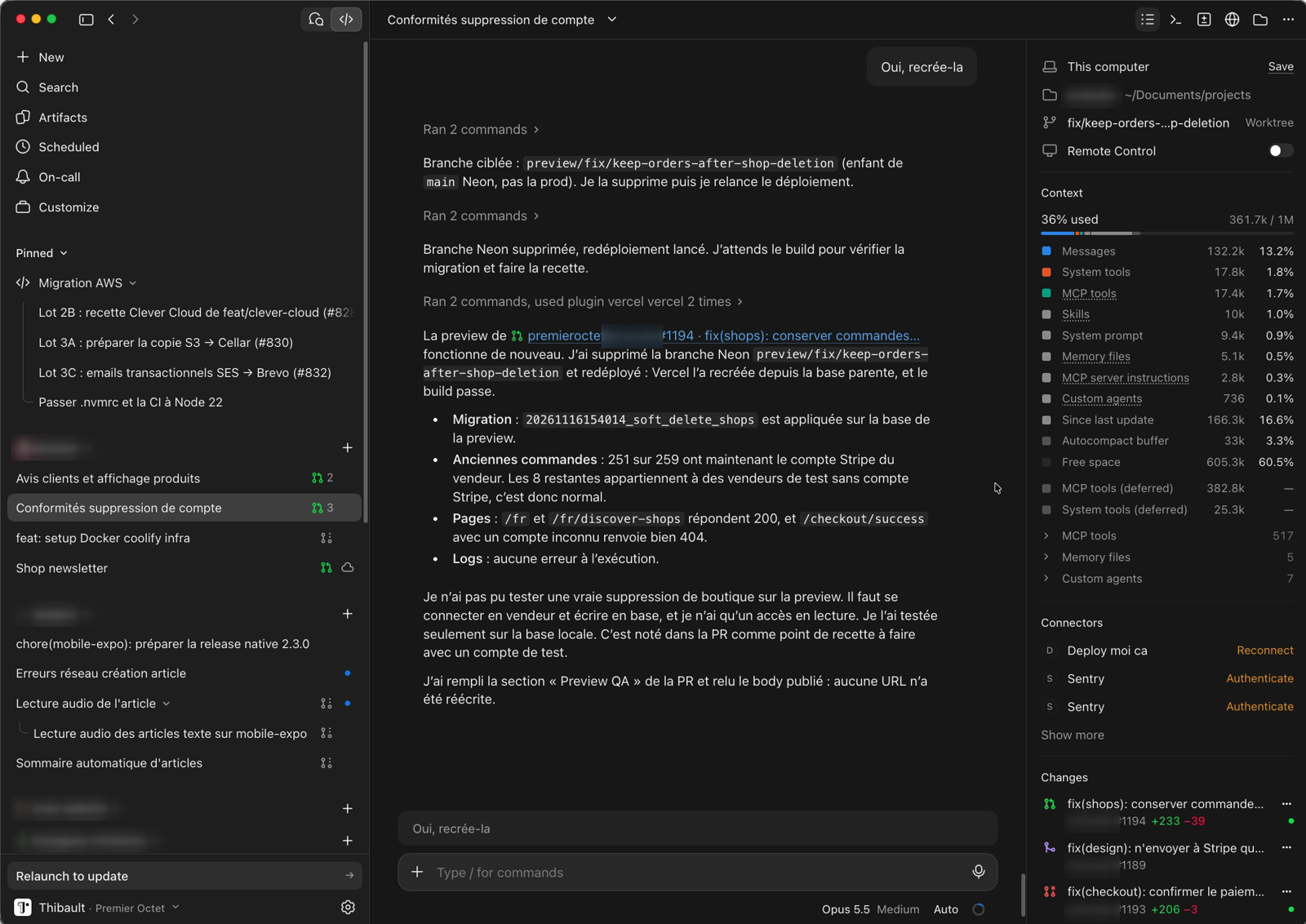
I realize that I no longer develop software; I describe, review, and arbitrate. At Premier Octet, that translates to working with Claude Code or Cursor: we draft prompts and plans, answer intermediate questions, connect to services (using MCP—a standard protocol giving agents access to external tools and data), review, validate, deploy.
When I say “we,” an AI is almost always involved. For example, code review is now routinely handled by AI as well as another human. Sometimes we produce so much that human review alone is no longer realistic. For validation, we can ask for an intermediate test—an agent will launch a browser, navigate, and verify the outcomes of its actions. We can enhance this by giving access to logs or databases. For deployment, some projects have MCPs to automate deployment actions (Vercel, Sentry, Coolify, etc.). The more services we connect, the more context we provide, the better the agent performs.
Despite how recent all this is, I’m confident about a few things:
- I will never work the old way again; “manual” coding makes less and less sense.
- Nobody can predict what the long-term impact of all these changes will be.
- AI is now the focal point of the entire industry.
Faster, Claude
Much has been said about time savings, but it’s not just about the code. Everything is affected:
- prototyping/mockups
- specifications
- development
- testing
- deployment
- reporting, audit, analysis
I’d say I move 5 to 10 times faster from idea to production now. The bottleneck seems to have shifted to review and testing—tasks where, for now, we don’t quite trust AI alone.
I’m left scrambling to keep up with all my projects, haunted by the feeling that I’m never doing enough. Why this unease, even as we speed up so much, solve problems more precisely, and multiply our output?
A Strange Kind of Grieving
I've gone through several phases, much like the stages of grief:
“AI will never replace real devs”—denial
“I still manage the review, the QA...”—bargaining and anger
“Why bother doing by hand what agents can do in seconds”—depression
“The whole industry is changing; doing things the old way no longer makes sense.”—acceptance
And yet, I’m also amazed by advances that help me resolve issues faster and more effectively than ever.
It’s still humans making decisions; that’s always been our unique input. What I’m really mourning is the “craft” I once saw in programming—sometimes even its artistry (beautiful code).
It’s far from total replacement though; humans are still needed for intuition, judgment, intent, thoughtful choices—for all the years of learning and expertise we bring.
“Writing Code Doesn’t Matter Anymore”
I share the view of my friend and colleague Bastien:
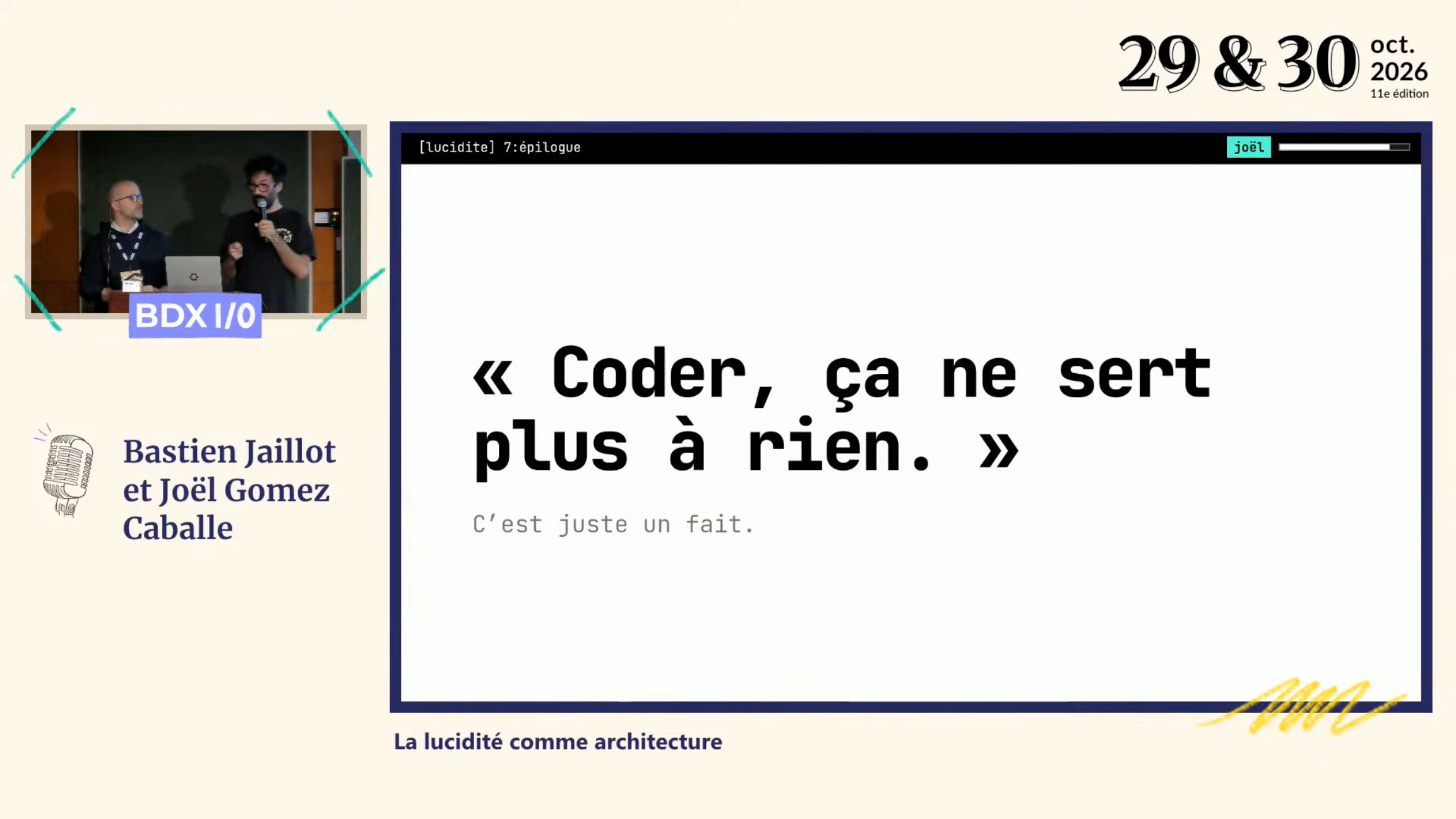
Bastien Jaillot and Joël Gomez Caballe, “La lucidité comme architecture”
BDX I/O 2026
What “coding” means here is generating code, algorithms, files.
I’ve known PHP and TypeScript inside-out for years, and prided myself on productivity. But now AI writes better, faster, and with fewer mistakes than I do.
That’s hard to accept if you thought the value of your work was all about code output.
Code remains an artifact, but it’s no longer the core of what’s valuable. The real value is thinking, structuring, and technical direction—knowing what the code needs to do.
Towards "Grey Box" Applications
It’s getting harder and harder to review the volumes of code we now generate. Sometimes we only review the constraints (the tests), occasionally only another AI will review depending on time or budget.
I think some already operate this way—in personal POC projects, for example, I no longer review code at all. So, what about security? How do we guarantee that this binary only writes to a certain folder? That this site can only request from authorized APIs?
I'm increasingly feeling the need for sandboxing to preserve confidence in what I ship—limiting behaviors within strict boundaries or a “box.” This comes in many flavors:
- Firewall: server with “deny by default” policy.
- Cloudflare Emdash: a CMS isolating plugins with restrictive sandbox permissions.
- Docker and docker-based sandboxes: isolating agents and applications.
- https://open-sandbox.ai: building sandboxed infra for AI apps.
- ...
This doesn’t mean abandoning structure—frameworks still matter. If I need to debug, I want to be able to quickly understand what’s going on.
“I'm not building the car, but dammit, I want to open the hood and actually know what I'm looking at.” https://brookslybrand.com/posts/do-frameworks-matter-anymore/
The Next Generation Is Knocking
It’s tough to get perspective when things are changing week to week, but some signs are clear.
We’ve never had as many people reach out for internships, full-time jobs, or freelance gigs. Junior hiring is incredibly tight, and that makes sense: juniors were doing exactly the kind of work that agents now handle. Mentoring and supervision now take even more time, just as economic pressures demand that we produce more, for less.
Conversely, we are constantly targeted by services or people pushing to “augment” our company, either through automated prospecting or by offering extra AI-piloting manpower.
You’ve probably heard it a hundred times: “Well, with AI these days...” But in reality, the quality of your output depends way more on the person than which type of AI you use. People still absolutely need to be trained for these jobs.
It’s a paradox: the developer role no longer exists, but IT expertise is more critical than ever.
Even our evaluation benchmarks need rethinking: does it still matter to know how to architect a frontend app? Model a database? How do you train for a career that’s morphing so fundamentally, even as you learn it?
So What Is Our Job Now?
Development is only part of the work. Even though AI now shows up in writing, summarizing, transcription, its biggest impact is code generation. I don’t feel completely replaced by a machine. The responsibility for what’s produced, understanding needs, translating them, making technical decisions, arbitrating, verifying—all that’s still on me.
I’ve noticed (and it reassures me) that different approaches and people still yield results of widely varying quality, even on the same model. So, while expertise now centers on using the tools, those years of experience and learning remain valuable.
Conclusion
I put off finishing this article for a few weeks, to sort my feelings and get some perspective. I find myself agreeing with colleagues: the job isn’t disappearing, it’s just refocusing.
But not at any cost:
- Productivity is now tied to subscriptions—the more I pay, the more I can produce.
- We still own our skills, but production capacity is “rented” (for now).
- There’s a heavy reliance on foreign services, with fluctuating prices, quotas, and ever-changing terms.
- Inequality is rising: freelancers, juniors, and smaller firms can’t always keep up with expensive AI subscriptions.
- There’s an invisible tax, vendor lock-in, see our article on DotAI 2026.
Here’s my Christmas wish list:
- truly accessible open-weight models: they already exist, but are still rarely used for day-to-day coding. I’d like them good and light enough for a small company to self-host, and someday to run locally without a fleet of GPUs
- interchangeable tools, open standards
- projects and workflows that account for the realities of working with AI and its dependencies, emphasizing transparency and kindness
- for the tech giants to slow down a little—before Skynet becomes the market's next reference model
Coding might not “exist” as it used to, but the 12-year-old who just wanted to tinker with everything? He’s still here.
References
"It's ok to be scared, it's okay to be excited." "I'm not building the car, but dammit, I want to open the hood and actually know what I'm looking at." https://brookslybrand.com/posts/do-frameworks-matter-anymore/
"Humans have a limited number of tokens per second." - Nicolas Martigno
"Own your intelligence" - https://x.com/rauchg/status/2117000819623243925
"The developer role has been dying for 40 years—and is doing better than ever." - https://blog.lepine.pro/le-metier-meurt-depuis-40-ans
"In 2026, for the first time, more than half of the traffic reaching sites on Cloudflare's network was not initiated by human interactions with the website." https://www.w3.org/2026/10/w3c-and-state-of-web-in-ai-era.html
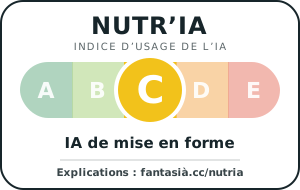
NUTR'IA
This article displays the NUTR'IA badge, a transparency score for AI usage inspired by the Nutri-Score and created by the Fantasià association. A grade from A (no AI) to E (artistic content generated) shows how much AI was involved.
Here it’s a C, “AI formatting”: I wrote the original article in French (rated B), and this English version was translated by AI.